Be prepared with hypoallergenic, easy-to-use starter studs designed for first-timers and DIY piercers. This guide highlights five reliable options ideal for different skin sensitivities, piercing locations, and daily activities. Best for newcomers who want simple, low-maintenance starter jewelry, or for anyone upgrading their existing lobe setups.
The following table provides a quick snapshot of the top five choices, including best-use scenario and key materials:
| Product | Best For | Material | Piercing Type |
|---|---|---|---|
| LECIEL 20 Pairs 4MM Ear Piercing Stud Earrings | First-time lobes and multiple piercing sites | Surgical steel | Lobe, nose, belly button |
| SugarTang Ear Piercing Kit | At-home beginners needing sterilized options | Surgical stainless steel | Lobe, multiple piercings |
| JUSTJANDM 12 Pairs Stud Earrings | Colorful, matching sets for daily wear | Surgical stainless steel | Lobe, cartilage |
| Caflon Surgical Steel 4mm Studs | Reliable, globally compliant standalone studs | Surgical steel | Lobe |
| BBILNS 20 Pairs 4mm Stud Earrings | Value-focused, replacement variety | Surgical stainless steel | Lobe, multiple piercings |
All selections emphasize hypoallergenic materials, simple backs, and sizes around 4mm to 4.5mm for standard starter piercings. Use caution with any gun-based piercing kit and follow sterile-use guidance.
LECIEL 20 Pairs 4MM Ear Piercing Stud Earrings

Best for first-time piercings with minimal risk of irritation. These surgical steel studs are marketed as hypoallergenic and rustproof, suitable for use with piercing guns in professional or home settings. The kit notes compatibility with multiple piercing sites beyond the lobes but advises verifying 4mm size for your instrument. Ideal for budget-conscious buyers seeking a broad starter set. Caution: confirm your piercing gun acceptance of 4mm posts before purchase.
5 Pairs Push-in Flat Back Stud Earrings, Silver, 4-8mm

Best for a growing set of sizes from 4mm to 8mm, with a push-in, threadless back design. The included butterfly backs provide flexibility for two backing styles and secure wear during daily activities. The set uses 316L surgical steel with cubic zirconia inlays, suitable for sensitive ears and multiple piercings. Choose this if you want a versatile size range for different earlobe spaces; avoid if you require screws or posts with traditional backings.
SugarTang Ear Piercing Kit

Best for at-home beginners needing a sterile, turnkey kit. This line emphasizes 316L surgical stainless steel and disposable kits in sealed packaging, with 4mm cubic zirconia stones for sparkle. It covers a broad range of piercings (lobe, forward helix, industrial, and more) with starter earrings designed for quick changes. Use this if you want a complete kit that supports multiple piercing locations and easy post-placement aftercare. Limitation: ensure your piercing gun (if used) matches 4mm posts for clean incisions.
JUSTJANDM 12 Pairs Ear Piercing Stud Earrings
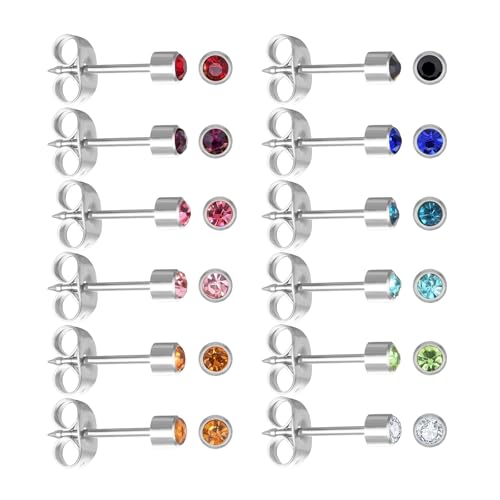
Best for color-coordinated daily wear and variety. This set features surgical stainless steel with multicolor cubic zirconia, offering 12 different color options in 4mm head sizes. It is nickel-free, suitable for sensitive ears, and designed for lobe or cartilage wear. Choose this if you want a varied visual palette; be aware that 2mm sizing is notably small, so verify your preferred size before use.
Caflon Surgical Steel 4mm Studs

Best for standardized, compliant starter studs. Each stone sits in sterilized surgical steel, with backs included for secure fastening. The product emphasizes FDA/EC compliance and individual packaging, which helps maintain sterility. The 4mm head is a common starter size for lobes. Caution: if you have metal sensitivities beyond nickel, verify material certifications and any potential alloy additives.
BBILNS 20 Pairs Ear Piercing Stud Earrings

Best for value-focused buyers who want a large set of 4mm cubic zirconia studs. The collection includes 20 pairs, made from 316L surgical stainless steel and designed to be hypoallergenic and nickel-free. The 4mm head size is standard for starter lobes, with a 10mm needle length and 0.9mm diameter for smooth piercing. Choose this if you need a budget-friendly, high-volume supply; avoid if you require a broader range of post sizes.
Buying Guide: How to Choose Ear Piercing Starter Studs
Material matters: hypoallergenic metals like surgical steel (316L) reduce irritation for sensitive ears. Look for items labeled nickel-free or medical-grade. For pierced cartilage, consider thicker posts and stronger backs.
Size and fit: 4mm heads are common starter sizes. Check the needle length and pin diameter to ensure clean piercing and comfortable healing. If you wear glasses or have active lifestyles, consider threadless or flat-back designs to minimize snagging.
Back design: push-in or screw-back options affect ease of wear. Push-in backs are convenient for quick changes and showering, while screw-backs offer extra security during sleep or workouts.
Multipack value: larger sets offer versatility for multiple piercings or shared use, but verify consistency in size, back style, and material across the pack.
Health and safety: confirm packaging is sealed and sterile when selecting disposable starter kits. Follow aftercare guidance to reduce the risk of infection or irritation after piercing.
Frequently Asked Questions
- What is the safest starter material for sensitive ears?
– Surgical steel (316L) is widely used for its hypoallergenic properties and durability. - Can I use piercing gun kits at home?
– Some kits are designed for home use, but ensure your gun supports the post size (4mm) and strictly follow hygiene guidelines. - Is 4mm the standard starter size?
– Yes, 4mm is a common starter head size for lobes and many cartilage piercings; always confirm compatibility with your instrument. - What backing is best for daily wear?
– Push-in or butterfly backs are convenient; threadless designs can reduce irritation and snagging during sleep. - Should I choose a multi-pack or a single pair?
– Multi-packs are cost-effective for replacements and multiple piercings, but verify material consistency across all pieces. - How do I avoid infections after piercing?
– Use sterile tools, clean hands, and follow recommended aftercare routines; keep the area dry and avoid handling with dirty hands.